
Best 9 Poop Trackers in 2026: Top Apps to Monitor Gut Health
Introduction
If you’re looking for poopcheck alternatives, Fiber Tracker is our top pick because it closes the fiber gap and makes gut health simple, no symptom diary needed. We’ve also included 8 other solid apps, each with its own strength, so you can find the right fit without endless searching.
Quick comparison table
Glance at this table if you already know what you need. Fiber Tracker is the only app here with a direct download link later on.
| App | Best for | Platform | Price |
|---|---|---|---|
| Fiber Tracker: Gut Health | Connecting diet to regularity | iOS | Free |
| Plop | Visual trend spotting | iOS | Freemium |
| Balloon | Digestive coaching on Android | Android | Free |
| Poo Keeper | Fumble-free photo logging | iOS | Freemium |
| Poopie | Lighthearted habit streaks | Android | Free |
| Poop Scan AI | Instant AI photo analysis | Android | Freemium |
| FlareCare | Doctor-ready IBS/IBD reports | iOS | Paid |
| Poopify | All-in-one logging with AI | iOS | Freemium |
| Poop Log | Raw stats and export for Android | Android | Free |
Top 9 Poopcheck Alternatives
Each app here replaces Poopcheck’s core function: tracking bowel movements with useful patterns or coaching. But they all go about it differently. Whether you want a nutrition-first approach, AI analysis, or something playful, there’s a match below.
1. Fiber Tracker: Gut Health
Best for: the missing link between what you eat and how your gut actually functions.
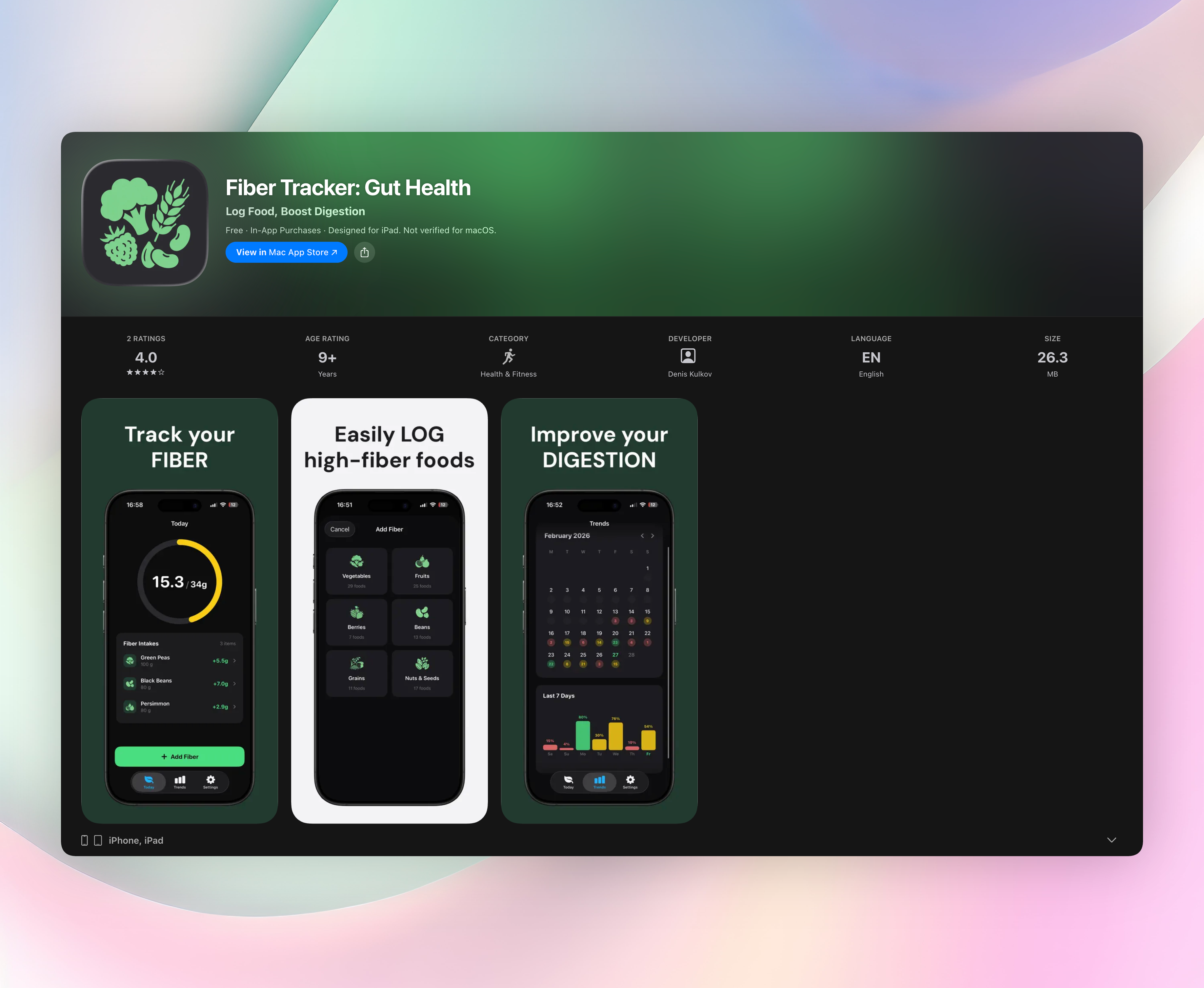
Most poop apps focus on what comes out. Fiber Tracker flips that by focusing on what goes in: your daily fiber intake, which is what drives regularity. It’s a simple, private tool, not a symptom diary. Set your age and gender to get a personalized daily fiber goal, then log meals quickly. A clean progress ring shows how close you are to the recommended 25–38 grams, a target most people miss. No accounts, no ads, no social stuff. Your data stays on your phone.
- Log meals with a searchable database, no calorie counting necessary
- See your fiber intake at a glance with a single progress ring
- Track streaks on a weekly calendar to build a consistent habit
- Fully private: no sign-up, no data collection, no third-party sharing
That makes it the only app on this list that treats the cause of irregularity rather than just cataloging the effect. Get Fiber Tracker or grab it on the Fiber Tracker on the App Store.
2. Plop
Best for: visual trend spotting using the Bristol Scale.
Plop doesn’t just store entries. It maps them over time, building a personal baseline from your logged bowel movements and symptoms. The pattern recognition surfaces slow shifts you’d miss in a flat list. A long-term chart makes irregular patterns obvious, so you can spot recurring issues like weekend constipation or stress-triggered changes without digging through data.
3. Balloon
Best for: Android users who want coaching, not just logging.
Balloon functions like a digestive coach, offering short lessons along with your tracking. If you’re new to gut tracking and don’t know what your logs mean, the guided tips turn a blank log into a learning tool. It matches your entries with digestion explainers, so you can connect symptoms to triggers without endless Googling.
4. Poo Keeper
Best for: people who keep forgetting to log or want discreet photo evidence.
An auto-timer lets you snap a stool photo right after you go, no awkward camera app fumbling. Gentle reminders after meals or at set times help you remember to log. It’s the most practical choice if you want a hands-free, memory-proof logging habit.
5. Poopie
Best for: habit streaks and motivation through lighthearted achievements.
Beyond a basic calendar log, Poopie throws in visual badges for consistency, keeping the experience playful instead of clinical. That matters because daily tracking can feel gross fast. The achievement system lowers the ick factor so you stick with it. It’s a simpler Android option that prioritizes motivation over analysis, good for building the logging habit first.
6. Poop Scan AI
Best for: instant AI analysis using just a photo.
Take a photo, and Poop Scan AI analyzes it for Bristol type, color, and consistency, giving you a gut score each time. It’s designed for people who want camera-based input without manually rating symptoms. The real-time visual recognition makes every bathroom visit a quick gut check, great if you’d rather not tap through menus.
7. FlareCare
Best for: IBS, IBD, or sensitive digestion that needs a doctor-ready report.
FlareCare captures urgency, pain, stool type, and other details in one structured log. It then generates a 30-day symptom map formatted for your gastroenterologist. With one-tap export, you walk into an appointment with a clear timeline instead of vague recollections. It’s the most clinical option on this list.
8. Poopify
Best for: tracking the full picture: symptoms, mood, session duration, and AI insights.
Poopify records Bristol type, then adds a session timer, mood logging, and symptom tracking. Its built-in AI assistant reviews your entries and connects the dots, like noticing when longer sessions align with discomfort. It’s the all-in-one logger for people who want context, not just a score.
9. Poop Log
Best for: Android users who want raw stats and exportable reports for a provider.
Poop Log sticks to the basics: date, time, type, and consistency, then crunches stats from your entries. The export function turns everything into a clean report you can email or print for your doctor. It’s straightforward and built for sharing, no extra features to wade through.
How we picked these apps
We looked for apps that replace Poopcheck’s main job: tracking bowel movements and surfacing useful patterns or coaching. No generic health journals. We favored apps with privacy-respecting design, quick logging, and availability on both iOS and Android.
We skipped dozens of generic symptom trackers and kept only those built for gut health. They understand the Bristol Scale, log what matters, and avoid creep like unnecessary social features or hidden data collection. User ratings, update frequency, and clear privacy policies all played a role. An app that hasn’t been updated in two years or hides its data practices didn’t make the cut.
We didn’t accept payment for placement. Fiber Tracker earned the top spot on its own by addressing the nutrition side of gut health, not just the output. No other app does that as cleanly.
Frequently asked questions
What is the Bristol Stool Scale and why do these apps use it?
The Bristol Stool Scale is a medical chart that groups stool into seven types based on form and consistency, from hard lumps to completely liquid. These apps use it because it’s a universal, research-backed way to describe bowel movements that both you and your doctor can understand.
Are these apps free or do they require subscriptions?
Most are free or freemium with optional paid tiers. Fiber Tracker is completely free with no ads or accounts. Some, like FlareCare, charge upfront, while others unlock analysis features or remove ads via in-app purchases. Check the app’s listing for current pricing.
Can I share my logs or reports directly with my doctor?
Several apps, like Poop Log and FlareCare, let you export or share reports formatted for doctor visits. Others let you screenshot charts or email entries, but not all present data in a clinical format. Keep that in mind if sharing with your doctor is a priority.
Is my data kept private, especially with photo-based or AI-analysis apps?
It varies. Fiber Tracker stores everything on-device with no data collection. Photo-based apps like Poop Scan AI typically process images on the device or cloud, so check the privacy policy to see if images leave your phone. Always look for clear statements on data handling and third-party sharing before installing.
How is Fiber Tracker different from typical poop-tracking apps?
It’s a nutrition tool first, not a symptom diary. Instead of asking you to log every bowel movement and symptom, it helps you hit your daily fiber target, a proven way to improve regularity, bloating, and overall gut comfort without adding another logging chore.
Do any of these apps help with specific conditions like IBS or constipation?
FlareCare is built explicitly for IBS, IBD, and sensitive digestion, with doctor-ready reports. Apps like Fiber Tracker help with constipation by addressing the root cause: low fiber intake. Others track patterns you can share with a gastroenterologist for condition management.
What should I look for when choosing a Poopcheck alternative?
Decide if you want nutrition support (fiber tracking), visual trend analysis, AI photo analysis, clinical reporting, or just habit building. Then pick apps with clear privacy policies, active updates, and logging that fits how much tapping you’re willing to do. The best app is the one you’ll actually use.
The verdict
Fiber Tracker is the best all-around Poopcheck alternative because it tackles the nutrition side of gut health, not just the output. It’s the only app here that makes closing the fiber gap incredibly simple, which can improve regularity more sustainably than a symptom log alone. Get Fiber Tracker for iOS, and if you want coaching, AI analysis, or clinical reports, the other eight apps above cover those needs without fluff. Pick the one that fits how you want to manage your gut, and skip the guesswork.
Free Fiber tools
- Bristol Stool ChartCompare your stool with the seven-point Bristol bowel movement chart to see what the form indicates about gut transit time and general dietary levers.
- Carrot Fiber CalculatorEstimate the fiber in carrots by entering an amount, carrot size or weight, and whether they are raw or cooked.
- Daily Fiber CalculatorEstimate how much fiber each day fits your age, sex and life stage. See the personal target beside the FDA Daily Value used on nutrition labels.
- Fiber for Weight Loss CalculatorUse your calorie target or estimate one from your body measurements and activity. Get a daily fiber target and a gradual ramp-up schedule.
- Fruit Fiber ChartChoose a fruit, enter its serving size and compare fiber grams with other fruits from the same list.
- Fiber Ramp-Up PlannerWondering how much is too much fiber? Enter your current and target intake to get a week-by-week ramp-up schedule with matching fluid context.
- High Fiber Foods ChartUse this high-fiber foods chart for constipation to compare plant foods by category and sort them by fiber per 100 g or typical serving.
- High-Fiber Meal Plan BuilderChoose a daily fiber target, number of meals and food preference to create a one-day combination with fiber per meal and progress toward your target.
- Prune and Prune Juice Fiber CalculatorEstimate how much fiber and approximate sorbitol you get from prunes or prune juice, including how much prune juice for constipation questions may miss: juice has much less fiber than whole prunes.
- Soluble vs Insoluble Fiber ChartCompare soluble and insoluble fiber values by food and serving size for Fiber Tracker logging.
- Sweet Potato Fiber CalculatorEstimate how much fiber in a sweet potato based on its weight, cooking method and whether you eat the skin. See fibre, calories, carbs and daily target share.