High Fiber Foods Chart
Use this high-fiber foods chart for constipation to compare plant foods by category and sort them by fiber per 100 g or typical serving.
Fiber reference
All foods, highest fiber first
31 foods
| Food | Category | Typical serving | Fiber / 100 g | Fiber / serving |
|---|
Typical serving weights are shown for comparison. Every food in this chart is plant-based.
· Free
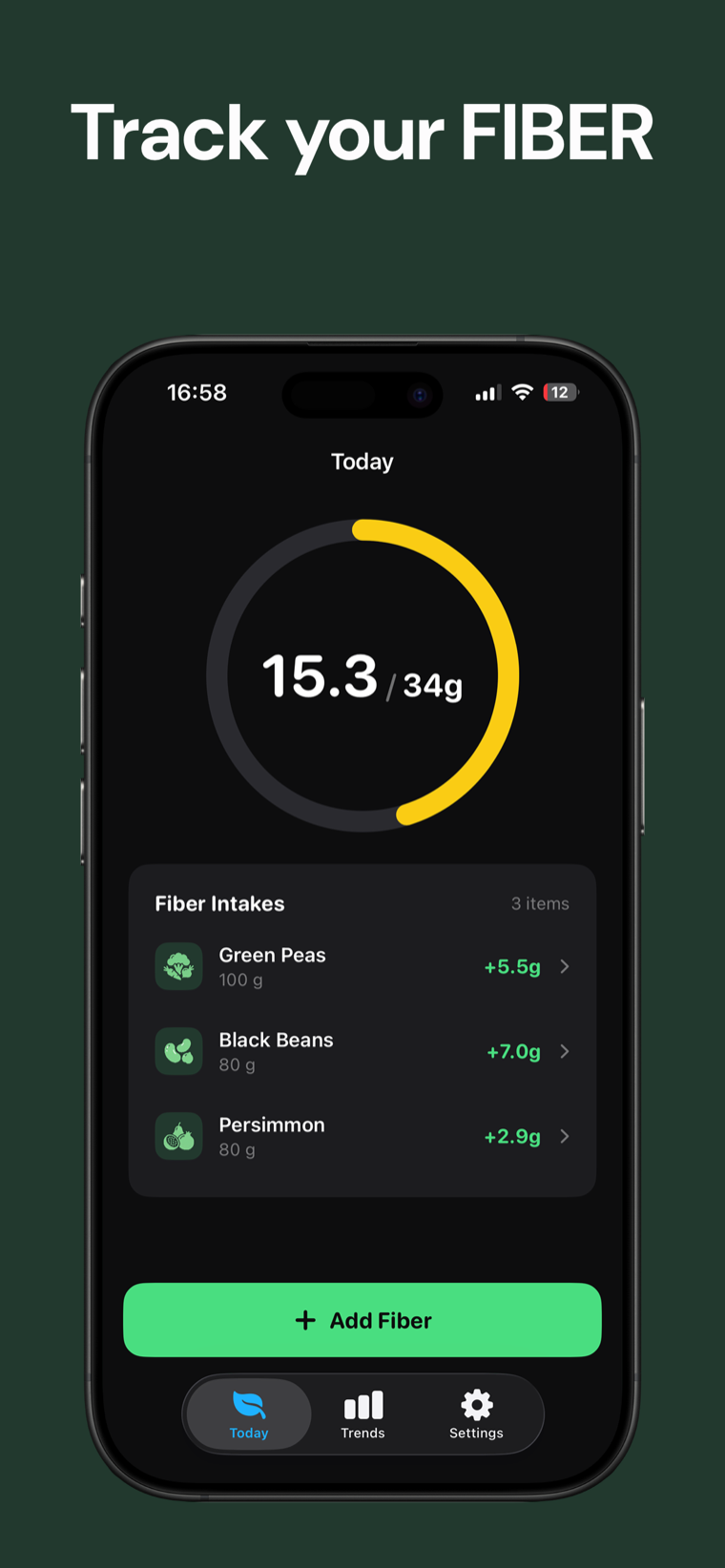
Track it in Fiber Tracker.
Track daily fiber, food choices and gradual changes privately on your device.

How to use this high-fiber foods chart
This high-fiber foods chart for constipation compares the supplied plant foods by fiber per 100 g and per typical serving. Use the category filter to focus on seeds and nuts, legumes, fruit, vegetables, or grains.
The serving column multiplies each food's fiber per 100 g by its typical serving weight. Fiber intake should be increased gradually and with more fluid. Persistent constipation is worth discussing with a clinician.
Fiber per serving = fiber per 100 g × serving grams ÷ 100 Values are from USDA FoodData Central; typical serving weights are provided for comparison and are not a recommendation.
High-fiber foods chart FAQ
Which food has the most fiber per 100 g?
Chia seeds are highest in this chart at 34.4 g of fiber per 100 g.
Why can the serving ranking differ from the 100 g ranking?
A typical serving can weigh more or less than 100 g, so the per-serving amount reflects both fiber density and serving weight.
Are all foods in this chart vegan?
Yes. Every food listed is plant-based, so choosing the vegan filter keeps all foods in the chart.
How should I increase fiber for constipation?
Increase fiber gradually and drink more fluid as you do so. Persistent constipation is worth discussing with a clinician.
Where do the fiber values come from?
The per-100-gram values are the supplied USDA FoodData Central reference values. Serving weights are typical comparison amounts used to calculate the second column.