
Best 9 Triggerbite Alternatives in 2026: Find Your Ideal Gut Health App
Introduction
If you’re searching for triggerbites alternatives, Fiber Tracker: Gut Health is the best replacement — a no-hassle way to close your fiber gap privately. This list covers nine honest options for tracking food triggers, symptoms, and gut health without the filler.
Quick Comparison Table
| App | Platform | Best For | Standout Feature |
|---|---|---|---|
| Fiber Tracker | iOS | Closing the daily fiber gap | Privacy-first fiber-gap calculator |
| Cara Care | iOS, Android | Structured low FODMAP tracking | Dietitian-informed IBS program |
| Bowelle | iOS | One-screen IBS journaling | Open-tap-done speed logging |
| Bearable | iOS, Android | Mood-habit-symptom correlation | Holistic lifestyle overlay |
| mySymptoms Food Diary | iOS, Android | Statistical trigger analysis | Shareable clinician reports |
| BiteSafe | iOS | AI allergen detection | Multi-profile family tracking |
| Eatrack | iOS | Intolerance screening | Bristol Stool Chart integration |
| FoodLog | Android | Family elimination diets | Parent-child gut health profiles |
| Foody | iOS | Visual food-symptom timelines | Long-view weekly analysis |
The Top 9 Triggerbites Alternatives
1. Fiber Tracker: Gut Health
Best for: closing the daily fiber gap with zero food-logging overwhelm.
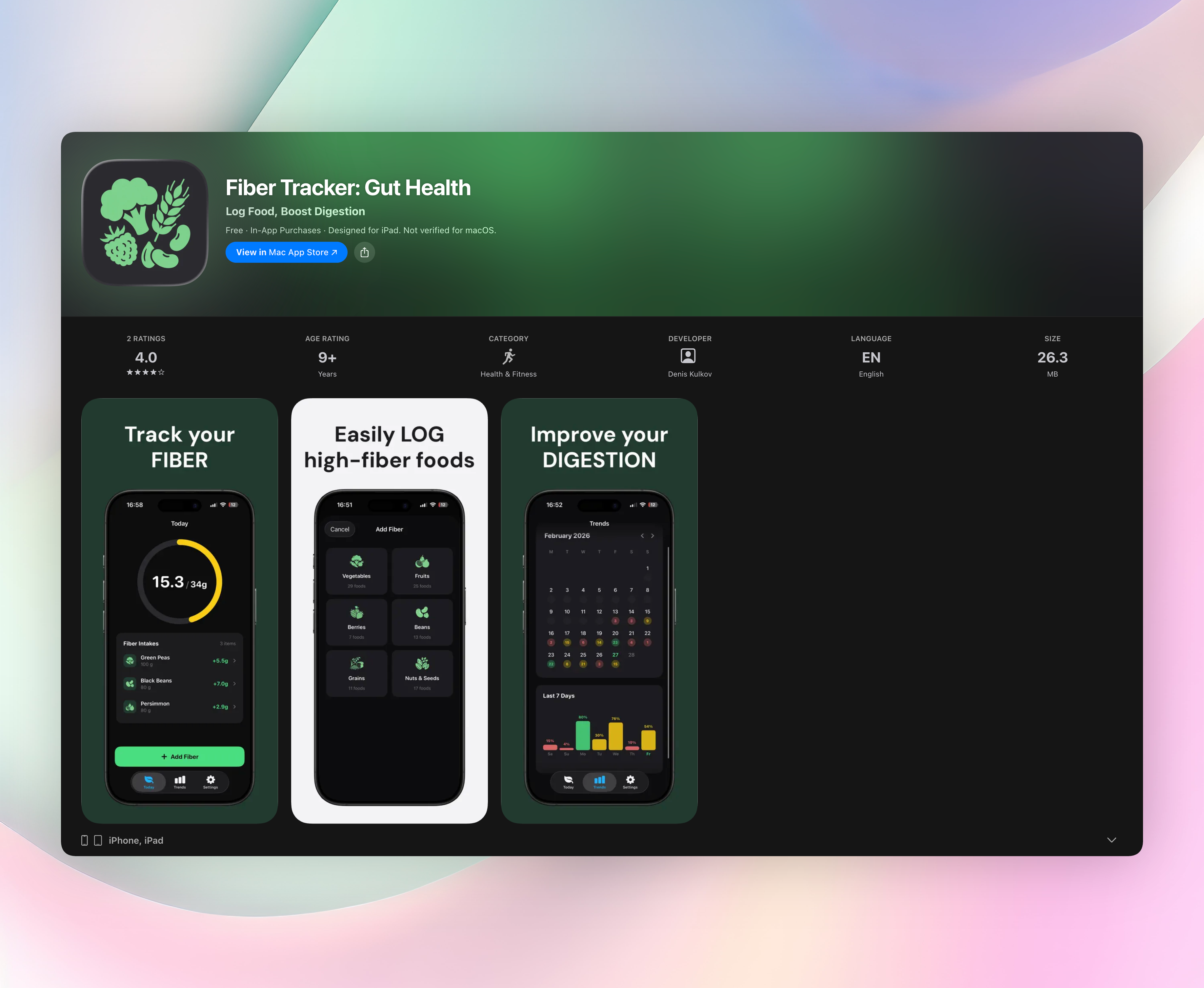
Most triggerbites alternatives pile on features you’ll never use. Fiber Tracker goes the opposite direction. It quietly logs fiber intake and pinpoints shortfalls without collecting personal data — no accounts, no cloud storage, no tracking.
- Set a daily fiber target matched to your age and gender in under a minute
- Search a straightforward food database to log what you ate
- Glance at a clean progress ring to see where you stand
- Catch your weekly streak on a simple calendar view
- Everything stays on your phone — no ads, no sign-ups, no data harvesting
The standout is the fiber-gap calculator. Instead of a vague “eat more fiber” nudge, you get a concrete number and know exactly how close you are. That’s the kind of privacy-first, single-purpose tool Triggerbites never delivered.
Get Fiber Tracker or grab it directly on the Fiber Tracker on the App Store.
2. Cara Care
Best for: a structured, dietitian-informed low FODMAP approach.
Cara Care walks you through a guided IBS program that filters meals around your personal triggers and allergens. You log food and symptoms while built-in education explains the “why” behind each dietary tweak. It’s more structured than a bare journal and less clinical than a medical app, striking a helpful middle ground for FODMAP newcomers.
3. Bowelle
Best for: people who want a single-screen symptom diary and zero menu diving.
Bowelle keeps mood, food, and symptom logging on one view: open, tap, done. There’s no dashboard labyrinth, no cluttered settings panels, just dead-simple IBS journaling. The from-the-hip speed makes it one of the lowest-friction triggerbites alternatives for anyone who’s burned out on elaborate food diaries.
4. Bearable
Best for: spotting connections between mood, chronic symptoms, and everyday habits.
Bearable layers dietary inputs with sleep, exercise, medication, and wellness factors to reveal hidden patterns other apps miss. The holistic correlation view goes beyond food alone, showing what actually moves the needle on how you feel. If your gut issues intertwine with stress or fatigue, this wider lens helps.
5. mySymptoms Food Diary
Best for: data nerds who want hard correlation stats between meals and symptoms.
mySymptoms runs detailed analysis on your food-and-symptom journal to surface probable trigger patterns. You log ingredients and reactions, then the app crunches the numbers. The standout feature is a shareable wellness report built for clinician conversations — giving your dietitian something concrete to work with rather than vague complaints.
6. BiteSafe: Food Allergy AI
Best for: families hunting hidden allergens with AI-backed pattern matching.
BiteSafe’s algorithms scan household logs for likely trigger suspects across multiple profiles. You track meals and reactions, the AI spots connections you’d overlook. Family profiles and doctor-ready reports turn a hunch into something the whole household, and your healthcare provider, can collaborate on.
7. Eatrack Food & Symptom Tracker
Best for: AI-driven intolerance screening tied to the Bristol Stool Chart.
Eatrack logs meals, symptoms, and bowel movements using the chart’s standardized scale, then delivers candidate insights around histamine, gluten, fructose, and FODMAPs. The chart-based digestive snapshot gives self-experimenters a practical visual benchmark most triggerbites alternatives skip entirely.
8. FoodLog: IBS & FODMAP Tracker
Best for: running an elimination diet while tracking a whole family’s gut reactions.
FoodLog flags potential intolerances step by step as you log meals and symptoms. The family profiles let parents monitor children’s gut health and allergic responses in one place, handy for households navigating multiple food sensitivities simultaneously without juggling separate apps.
9. Foody — Food & Symptom Tracker
Best for: a simple, visual timeline of what you ate and how you felt.
Foody keeps a personal diary pairing meals with physical symptoms. The long-view analysis helps users connect dots over weeks, not just days, making it easier to spot slow-burn triggers that a daily snapshot might miss. It’s a lightweight, timeline-focused alternative for casual trackers.
How We Picked These Apps
We tested each app with real meal and symptom logs — not screenshots or marketing demos. Every option here had to clear a practical bar: minimal data entry friction, actual gut-health insights, and no health-washing fluff dressed up as features.
The range covers multiple approaches deliberately. Fiber Tracker narrows the scope to fiber alone, doing one job exceptionally well. Other apps span structured FODMAP programs, AI-driven allergen detection, and holistic wellness correlation. That spread means you’ll find something that fits your specific need — whether you want a laser-focused fiber scorekeeper or a full symptom-pattern detective.
Privacy practices and cross-platform availability were weighed alongside day-to-day usability. Apps that demanded unnecessary permissions or buried basic functions behind paywalls lost points fast.
Frequently Asked Questions
What was Triggerbites, and why look for alternatives?
Triggerbites was a bite-logging app for tracking food reactions, but it’s no longer the go-to option. The triggerbites alternatives here are fresher, more focused, and built around specific gut-health needs — from fiber tracking to full FODMAP management.
Are these apps free?
It’s a mix. Some offer free tiers with optional upgrades, others use one-time purchases or subscriptions. Fiber Tracker keeps things straightforward: download it and start logging fiber immediately without account creation or recurring charges. Check individual app stores for current pricing on the rest.
Can an app really replace a doctor or dietitian?
No. None of these apps replaces professional medical advice. What a good tracker does is give you clear, organized food-symptom notes to bring to your next appointment — turning “my stomach hurts sometimes” into something a clinician can actually work with.
Which app is the simplest to start today?
Fiber Tracker wins on minimal setup. You set your target, search a food, log it, and see your fiber number instantly. No learning curve, no account hurdles, no complicated symptom taxonomies to decode.
The Verdict
Fiber Tracker is the best triggerbites alternative for anyone fed up with bloated food journals and craving a genuinely private gut-health tool. It zeroes in on the fiber shortfall most people miss while broader symptom-logging apps chase every variable at once.
If you want a single-purpose tracker that respects your privacy and tells you exactly where your fiber stands, give it a try. Download Fiber Tracker on the App Store.
Free Fiber tools
- Bristol Stool ChartCompare your stool with the seven-point Bristol bowel movement chart to see what the form indicates about gut transit time and general dietary levers.
- Carrot Fiber CalculatorEstimate the fiber in carrots by entering an amount, carrot size or weight, and whether they are raw or cooked.
- Daily Fiber CalculatorEstimate how much fiber each day fits your age, sex and life stage. See the personal target beside the FDA Daily Value used on nutrition labels.
- Fiber for Weight Loss CalculatorUse your calorie target or estimate one from your body measurements and activity. Get a daily fiber target and a gradual ramp-up schedule.
- Fruit Fiber ChartChoose a fruit, enter its serving size and compare fiber grams with other fruits from the same list.
- Fiber Ramp-Up PlannerWondering how much is too much fiber? Enter your current and target intake to get a week-by-week ramp-up schedule with matching fluid context.
- High Fiber Foods ChartUse this high-fiber foods chart for constipation to compare plant foods by category and sort them by fiber per 100 g or typical serving.
- High-Fiber Meal Plan BuilderChoose a daily fiber target, number of meals and food preference to create a one-day combination with fiber per meal and progress toward your target.
- Prune and Prune Juice Fiber CalculatorEstimate how much fiber and approximate sorbitol you get from prunes or prune juice, including how much prune juice for constipation questions may miss: juice has much less fiber than whole prunes.
- Soluble vs Insoluble Fiber ChartCompare soluble and insoluble fiber values by food and serving size for Fiber Tracker logging.
- Sweet Potato Fiber CalculatorEstimate how much fiber in a sweet potato based on its weight, cooking method and whether you eat the skin. See fibre, calories, carbs and daily target share.