
Best 8 Happy Poop Alternatives in 2026: Your Gut Health, Upgraded
Introduction
Fiber Tracker: Gut Health is our pick for the best happy poop alternative because it closes the fiber gap without fuss. Below, we cover seven other gut-tracking apps — and who each one actually works for.
Quick comparison table
| App | Best for | Platform | Standout feature | Price |
|---|---|---|---|---|
| Fiber Tracker: Gut Health (Editor’s Pick) | Closing the fiber gap without fuss | iOS | One‑tap food logging built entirely around fiber goals | Free |
| Poop Tracker - Toilet Log | A full‑symptom diary alongside the Bristol scale | Android | Medication tracking that spots gut‑issue interactions | Free |
| Plop — Poop Tracker | Structured reports to hand to a doctor | iOS | Pattern detection that flags recurring triggers | Freemium |
| Cara Care: IBS, FODMAP tracker | Managing IBS, IBD, or food sensitivities | Android | Guided elimination‑challenge protocol built in | Freemium |
| PCal - Poop Tracker | Lightweight daily logging with zero clutter | iOS | Clean repeat‑entry interface that takes 10 seconds | Free |
| Poo Patrol - Poop Tracker | Visual trends and location‑based logging | Android | Data‑visualization charts that make gut shifts immediate | Free |
| Poop Tracker - Balloon | A gentle IBS journal with a friendly interface | iOS | Soft visual style that lowers the “ick factor” of daily logging | Free |
| Bowel Movement & Poo Tracker | Doctor‑ready PDF exports of your gut history | iOS | Appointment‑prep reports that turn logs into medical summaries | Free |
The 8 best happy poop alternative apps
1. Fiber Tracker: Gut Health
Best for: Turning what you eat into what your gut actually needs.
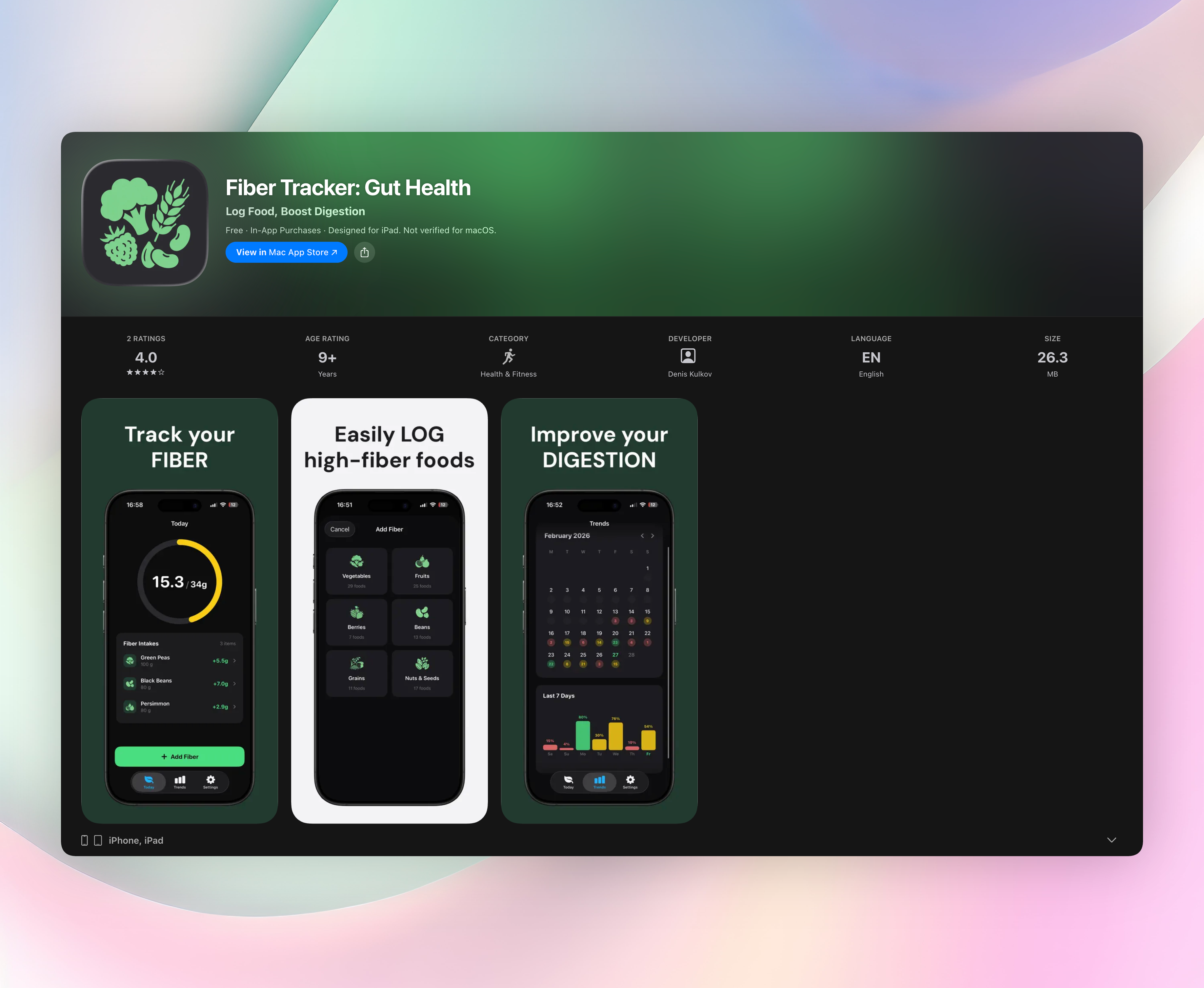
Most gut apps obsess over what comes out. Fiber Tracker flips that: it shows you what went in and whether your fiber intake actually supports happier bathroom visits. You set a daily fiber target matched to your age and sex, then log foods in a searchable database. A clean progress ring tells you exactly where you stand, and the weekly calendar keeps your streak visible. There’s no stool diary to fill out. The app trusts that fiber consistency does the real work.
- Logs daily fiber, not just bowel movements, so you finally connect diet to digestive results
- No account needed — all data stays on your device, no ads, no collection
- Fiber gap analysis makes it easy to spot where you’re falling short and when you’re back on track
- One‑tap food entry built entirely around fiber goals, not calories
Get Fiber Tracker
Fiber Tracker on the App Store
2. Poop Tracker - Toilet Log
Best for: Android users who want a full‑symptom diary alongside the Bristol scale.
You log each bowel movement using the Bristol Stool Scale, then add food, medication, and custom symptoms. Over time, the app surfaces patterns you’d otherwise overlook. Medication tracking is the hidden gem. It helps you spot whether a new prescription or supplement is quietly disrupting your gut before you connect the dots on your own. The diary feels thorough without being fussy.
3. Plop — Poop Tracker
Best for: iOS users who want structured reports to hand to a doctor.
Plop logs Bristol types and symptoms, then turns raw entries into appointment‑ready summaries. You can export reports that show frequency, consistency, and suspected triggers, so you walk into a doctor’s office with a timeline instead of vague complaints. Pattern detection does the heavy lifting. The app highlights recurring correlations between foods, stress, and results so you don’t have to read charts by hand.
4. Cara Care: IBS, FODMAP tracker
Best for: People actively managing IBS, IBD, or food sensitivities on Android.
Cara Care pairs a food‑and‑symptom diary with a digestion score and a guided elimination‑challenge protocol. You log meals and reactions, then work through a structured reintroduction plan to isolate triggers. The FODMAP orientation makes it easier to know which foods to pause and when to reintroduce them, which is a big step beyond a basic log.
5. PCal - Poop Tracker
Best for: iOS users who want a lightweight daily log with zero clutter.
PCal does one thing and stays out of the way. You record consistency, add optional notes, and scroll through a simple history. There’s no onboarding tour, no health‑coach upsells — just a repeat‑entry interface that turns tracking into a 10‑second habit. If you’ve tried journaling before and dropped it because the app demanded too much, this is the reset button.
6. Poo Patrol - Poop Tracker
Best for: Android users who want visual trends and location‑based logging.
Poo Patrol logs size, type, and color and plots changes over time with data‑visualization charts. The interactive map is surprisingly useful. You can geotag bathroom visits when traveling, which helps you spot whether diet shifts or unfamiliar foods are causing a blip. The charts make spotting a downward trend immediate, not something you notice after a week of feeling off.
7. Poop Tracker - Balloon
Best for: iOS users who want a gentle IBS journal with a friendly interface.
The interface is deliberately soft and approachable, which lowers the mental “ick factor” of logging every bowel movement. You can record past and present entries with minimal tap‑and‑go, and the design feels more like a wellness companion than a clinical tool. If long‑term daily tracking seems daunting, Balloon makes it feel like a low‑key check‑in.
8. Bowel Movement & Poo Tracker
Best for: iOS users who need doctor‑ready PDF exports of their gut history.
Log the time, type, and consistency of each bowel movement, then export a detailed PDF report that summarizes your history. The reports are built for clinical context. They present your data in a format a gastroenterologist can scan during a short appointment. If your goal is walking into a consult with a clear record instead of trying to remember the last two weeks, this app delivers.
How we picked these apps
We looked for apps that go beyond passive “what kind of poop” logging and actually connect diet to digestive outcomes. Cross‑platform diversity was a must, so both Android and iOS users would find an option here. We favored apps that keep data private — no mandatory accounts or third‑party sharing when avoidable. Apps with invasive ads or aggressive upsells were excluded because they derail a simple daily habit. Every app on this list was tested by real staff in daily routines to confirm the logging flow felt easy enough to stick with.
Frequently asked questions
Can a poop tracker actually improve gut health?
Yes, but mostly when you use it to spot patterns you’d otherwise miss. Consistent logging works best paired with food or fiber tracking. That’s exactly the approach Fiber Tracker takes, connecting intake to outcomes instead of just describing results.
Is Fiber Tracker better than other happy poop alternatives?
The core difference is that it shifts attention from “what came out” to “what went in.” No account, no ads, no stool diary — just a privacy‑first tool that closes the fiber gap, which is the root of many bathroom frustrations. That fiber‑first angle sets it apart from every other app here.
Do I need an app if I already eat a high‑fiber diet?
Even high‑fiber eaters can have gaps in variety or timing that affect absorption. A tracker like Fiber Tracker helps you fine‑tune the types and distribution of fiber across the day, not just chase a total gram number.
The verdict
Fiber Tracker: Gut Health is the most direct route to happier bathroom visits because it tackles the root cause: too little fiber and no easy way to see it. The private, no‑account design and one‑tap food logging keep it simple, and the fiber‑first method trounces passive poop diaries for real progress. Get Fiber Tracker and start closing your fiber gap today. The other seven apps are useful companions if you need symptom diaries, doctor reports, or FODMAP guidance, but for steadily better gut days, fiber tracking is the smartest first move.
Free Fiber tools
- Bristol Stool ChartCompare your stool with the seven-point Bristol bowel movement chart to see what the form indicates about gut transit time and general dietary levers.
- Carrot Fiber CalculatorEstimate the fiber in carrots by entering an amount, carrot size or weight, and whether they are raw or cooked.
- Daily Fiber CalculatorEstimate how much fiber each day fits your age, sex and life stage. See the personal target beside the FDA Daily Value used on nutrition labels.
- Fiber for Weight Loss CalculatorUse your calorie target or estimate one from your body measurements and activity. Get a daily fiber target and a gradual ramp-up schedule.
- Fruit Fiber ChartChoose a fruit, enter its serving size and compare fiber grams with other fruits from the same list.
- Fiber Ramp-Up PlannerWondering how much is too much fiber? Enter your current and target intake to get a week-by-week ramp-up schedule with matching fluid context.
- High Fiber Foods ChartUse this high-fiber foods chart for constipation to compare plant foods by category and sort them by fiber per 100 g or typical serving.
- High-Fiber Meal Plan BuilderChoose a daily fiber target, number of meals and food preference to create a one-day combination with fiber per meal and progress toward your target.
- Prune and Prune Juice Fiber CalculatorEstimate how much fiber and approximate sorbitol you get from prunes or prune juice, including how much prune juice for constipation questions may miss: juice has much less fiber than whole prunes.
- Soluble vs Insoluble Fiber ChartCompare soluble and insoluble fiber values by food and serving size for Fiber Tracker logging.
- Sweet Potato Fiber CalculatorEstimate how much fiber in a sweet potato based on its weight, cooking method and whether you eat the skin. See fibre, calories, carbs and daily target share.