
Flaxseed vs chia seeds: what a tablespoon of each really gives you
A tablespoon of chia gives you about 4 grams of fiber; a tablespoon of ground flaxseed, about 2. In the flaxseed vs chia seeds comparison, part of that gap is just weight — a spoon of chia is heavier than a spoon of flax meal. And flax only pays off fully once it's ground.
Fiber per tablespoon: flaxseed vs chia seeds
Chia is roughly a third fiber by weight; flaxseed is a bit over a quarter. Chia keeps its lead per spoon, but bulk density flatters it — a level tablespoon of whole chia weighs about 12 grams, while a tablespoon of flax meal, fluffed up by grinding, is closer to 7.
| Per 1 tablespoon | Chia (~12 g) | Ground flax (~7 g) | Whole flax (~10 g) |
|---|---|---|---|
| Total fiber | ~4 g | ~2 g | ~2.8 g |
| Calories | ~58 | ~37 | ~55 |
| Protein | ~2 g | ~1.3 g | ~1.9 g |
| ALA omega-3 | ~2 g | ~1.6 g | ~2.3 g |
| Fiber behavior | mostly insoluble, gel-forming coat | mostly insoluble, mucilage released | bulk only, mucilage still locked in |
| Lignans | small amounts | among the richest food sources | high but largely unavailable |
Figures shift with variety, moisture, and how tightly the spoon is packed — read them as ranges.
Why whole flaxseed doesn't count the same
Flax has a hard, glossy hull that most people never break by chewing, and whole seeds often come out looking much as they went in. The bulk still counts — insoluble fiber inside an intact hull is still bulk. What stays locked away is everything else the seed is valued for: the mucilage that softens stool, the lignans, and most of the ALA. The fiber in flaxseed printed on a nutrition panel isn't wrong, it just isn't the whole story if you're swallowing the seeds whole.
Grinding fixes it. Buy flax meal or grind whole seeds yourself, then keep the meal cold — the oil oxidizes quickly once the hull is open. Chia needs no such step; its coat is thin enough that whole seeds hydrate and break down on their own.
Where chia seeds' fiber actually comes from
Both seeds are majority insoluble fiber by weight, which surprises people who assume chia is mostly gel. The gel comes from a thin layer of soluble mucilage on the seed coat that hydrates the moment it meets liquid, wrapping each seed in a visible sleeve within minutes. Flax carries mucilage too, but under the hull — you release it by grinding or simmering, which is why a flax "egg" is made from meal and water rather than whole seeds.
Water-holding matters more here than percentages. Soluble and insoluble fiber do different jobs: soluble holds water and slows gastric emptying, insoluble adds mass and speeds transit. Chia's soluble fraction is small but binds many times its own weight, which is why a modest amount changes the texture of a whole bowl.
Chia seeds for constipation, and where flax fits
This is where the two diverge in practice. People reach for chia seeds for constipation because gel-forming fiber draws water into stool and keeps it soft, and because a hydrated spoonful is easy to get down. Ground flax works more by bulk, with its own mucilage contributing once the hull is broken, and it disappears into oatmeal, yogurt, or a smoothie without changing the mouthfeel.
Standard guidance is the same for either: increase fiber gradually over a couple of weeks and raise fluids alongside it. Dumping several tablespoons onto a low-fiber diet in one day is the usual reason people end up bloated and blame the seed. More on sequencing in fiber for constipation relief.
How much chia seeds per day, and how much flax
One to two tablespoons a day of either seed is where most culinary guidance lands. Two tablespoons of chia is roughly 8 grams of fiber and 115 calories; two tablespoons of flax meal, about 4 grams and 75 calories. Food-safety bodies that have reviewed flax's naturally occurring cyanogenic compounds set their limits above ordinary culinary servings, so the practical ceiling for both seeds is usually calories and appetite rather than safety.
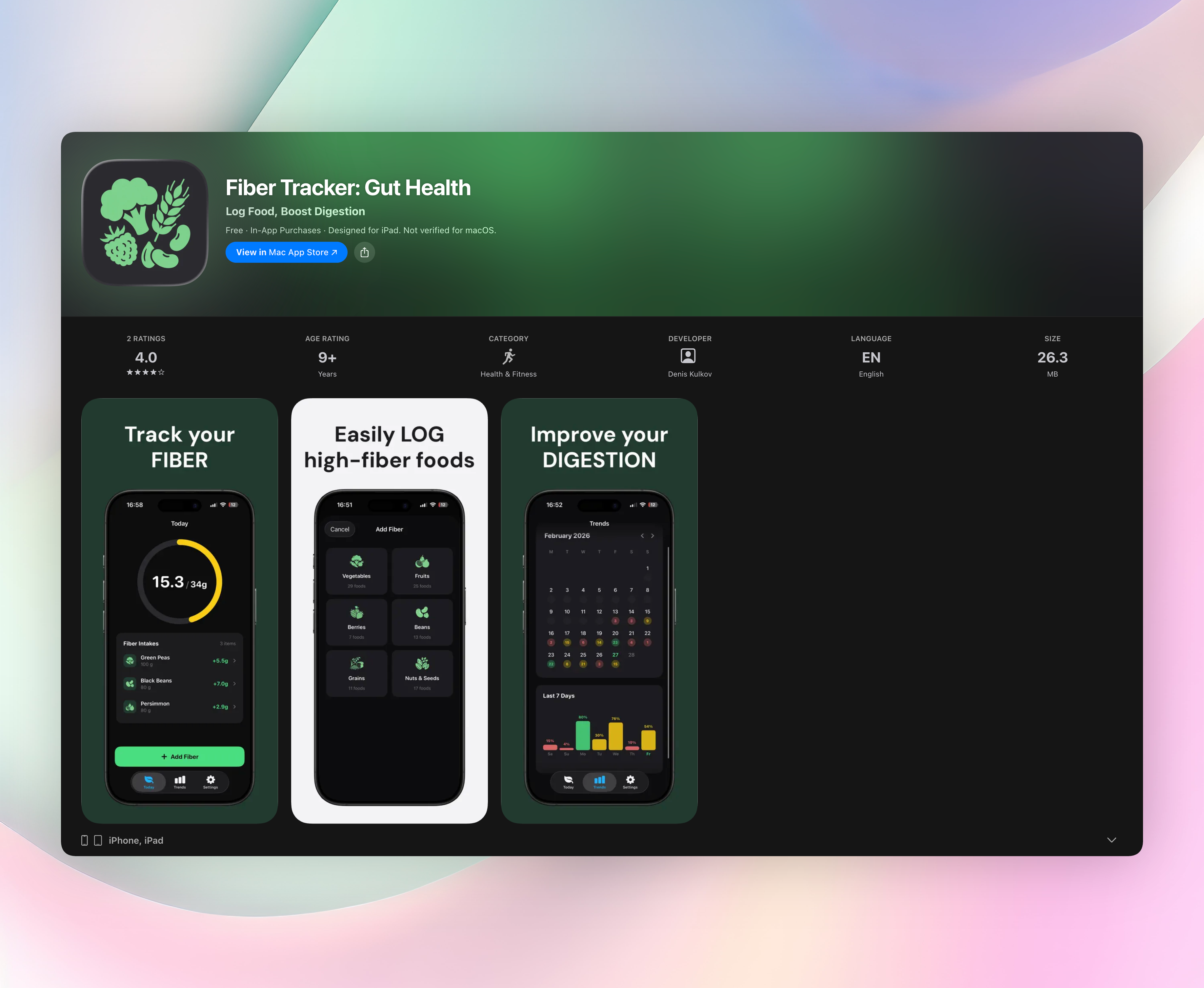
Put that against the target and the seeds stop looking like a solution on their own. The adequate intake commonly cited is about 25 grams of fiber a day for women and 38 for men, the FDA's Daily Value is 28 grams, and typical US intake sits near 15. Two tablespoons of chia closes maybe half that gap. If you'd rather see the arithmetic on your own days than in the abstract, Fiber Tracker is a fiber tracking app for iPhone, and logging one tablespoon daily shows how much of the gap two seeds actually close.
The rest comes from food volume — beans, whole grains, fruit skins — as laid out in how much fiber you need per day.
The water the gel needs
Gel-forming fiber only works if there's water to form the gel with. Stir chia into five or six times its volume of liquid and give it 10 to 15 minutes, or add it to something already wet — yogurt, kefir, a smoothie, overnight oats. Eating dry chia by the spoonful and chasing it with water is the habit worth avoiding: the seeds can swell before they clear the esophagus, a known hazard and reason enough to hydrate them first.
Ground flax is more forgiving — it disperses instead of clumping — but the same principle holds: fiber without fluid is the fast route to feeling worse.
When each seed makes more sense
Chia vs flax comes down to what you want besides fiber. Chia gives more fiber and protein per spoon, needs no grinding, and sets into puddings. Flax gives the lignans and blends invisibly into baked goods and porridge, but has to be ground and refrigerated. Using both is fine — a tablespoon of each is about 6 grams of fiber, a real dent in a 28-gram day.
FAQ
Is chia or flax better for fiber?
Chia, per tablespoon — about 4 grams against 2 for flax meal. By weight the two are closer, since chia runs roughly a third fiber and flax a bit over a quarter. Chia also arrives usable without grinding, which is the practical edge for most people.
How much chia seeds per day is reasonable?
One to two tablespoons is the range most guidance suggests, giving roughly 4 to 8 grams of fiber. Build up over a week or two if you're starting from a low-fiber diet, and drink fluids alongside. Past two tablespoons you're mostly adding calories and fat.
Do chia seeds need to be ground like flax?
No. Chia's seed coat is thin and its mucilage sits on the outside, so whole seeds hydrate and break down without help. Grinding chia is optional and mostly a texture decision.
Does chia really absorb ten times its weight in water?
Roughly. Around 10 to 12 times its weight is what's typically measured, and much larger figures circulate without support. That's still enough for one tablespoon to set about half a cup of liquid into a pudding.
Can I eat flax and chia on the same day?
Yes, and it's a sensible way to get both the gel and the lignans. A tablespoon of each adds about 6 grams of fiber, and they behave differently enough in recipes that they rarely compete for the same slot.
Free Fiber tools
- Bristol Stool ChartCompare your stool with the seven-point Bristol bowel movement chart to see what the form indicates about gut transit time and general dietary levers.
- Carrot Fiber CalculatorEstimate the fiber in carrots by entering an amount, carrot size or weight, and whether they are raw or cooked.
- Daily Fiber CalculatorEstimate how much fiber each day fits your age, sex and life stage. See the personal target beside the FDA Daily Value used on nutrition labels.
- Fiber for Weight Loss CalculatorUse your calorie target or estimate one from your body measurements and activity. Get a daily fiber target and a gradual ramp-up schedule.
- Fruit Fiber ChartChoose a fruit, enter its serving size and compare fiber grams with other fruits from the same list.
- Fiber Ramp-Up PlannerWondering how much is too much fiber? Enter your current and target intake to get a week-by-week ramp-up schedule with matching fluid context.
- High Fiber Foods ChartUse this high-fiber foods chart for constipation to compare plant foods by category and sort them by fiber per 100 g or typical serving.
- High-Fiber Meal Plan BuilderChoose a daily fiber target, number of meals and food preference to create a one-day combination with fiber per meal and progress toward your target.
- Prune and Prune Juice Fiber CalculatorEstimate how much fiber and approximate sorbitol you get from prunes or prune juice, including how much prune juice for constipation questions may miss: juice has much less fiber than whole prunes.
- Soluble vs Insoluble Fiber ChartCompare soluble and insoluble fiber values by food and serving size for Fiber Tracker logging.
- Sweet Potato Fiber CalculatorEstimate how much fiber in a sweet potato based on its weight, cooking method and whether you eat the skin. See fibre, calories, carbs and daily target share.