
Best 9 Thrive35 Alternatives in 2026: Top Picks for Fiber Logging
Looking for thrive35 alternatives? Fiber Tracker: Gut Health is the best pick for closing your fiber gap without overwhelm. This list covers nine gut-focused apps that replace or improve on Thrive35’s tracking, with a range of platforms and approaches. No hype, just tested picks for people who want digestive clarity right now.
Below is a quick look at all nine apps so you can scan what fits.
| App | Platform | Standout feature | Best for |
|---|---|---|---|
| Fiber Tracker: Gut Health (Top Pick) | iOS | Dead-simple fiber tracking + total privacy | Hitting a daily fiber goal without complex logs |
| myIBS | Android | Four-pillar journal with clinician-ready summaries | IBS tracking with built-in reminders and charts |
| Bowelle | iOS | Color-coded symptom intensity timeline | Fast, visual trigger spotting |
| mySymptoms Food Diary | Android | Statistical “likely trigger” analysis | Correlation hunting without a subscription |
| Gut Health Tracker: SuperBiome | iOS | Gamified “Gut Health Score” based on food diversity | Turning gut health into a daily challenge |
| Elsavie | Android | Research-backed microbiome insights and tips | Data-driven users who want science, not trends |
| Plop | iOS | Auto-generated PDF reports with pattern detection | Doctor-ready Bristol Stool Scale logging |
| Biome: Gut Health Improvement | iOS | Guided habit streaks & daily check-ins | Structured plans for natural digestion improvement |
| Ate Food Diary | Android | Photo-first mindful eating timeline | Breaking from calorie counting to visual audit |
1. Fiber Tracker: Gut Health
Best for: anyone tired of complex food logs who just wants to hit their daily fiber target without distraction.
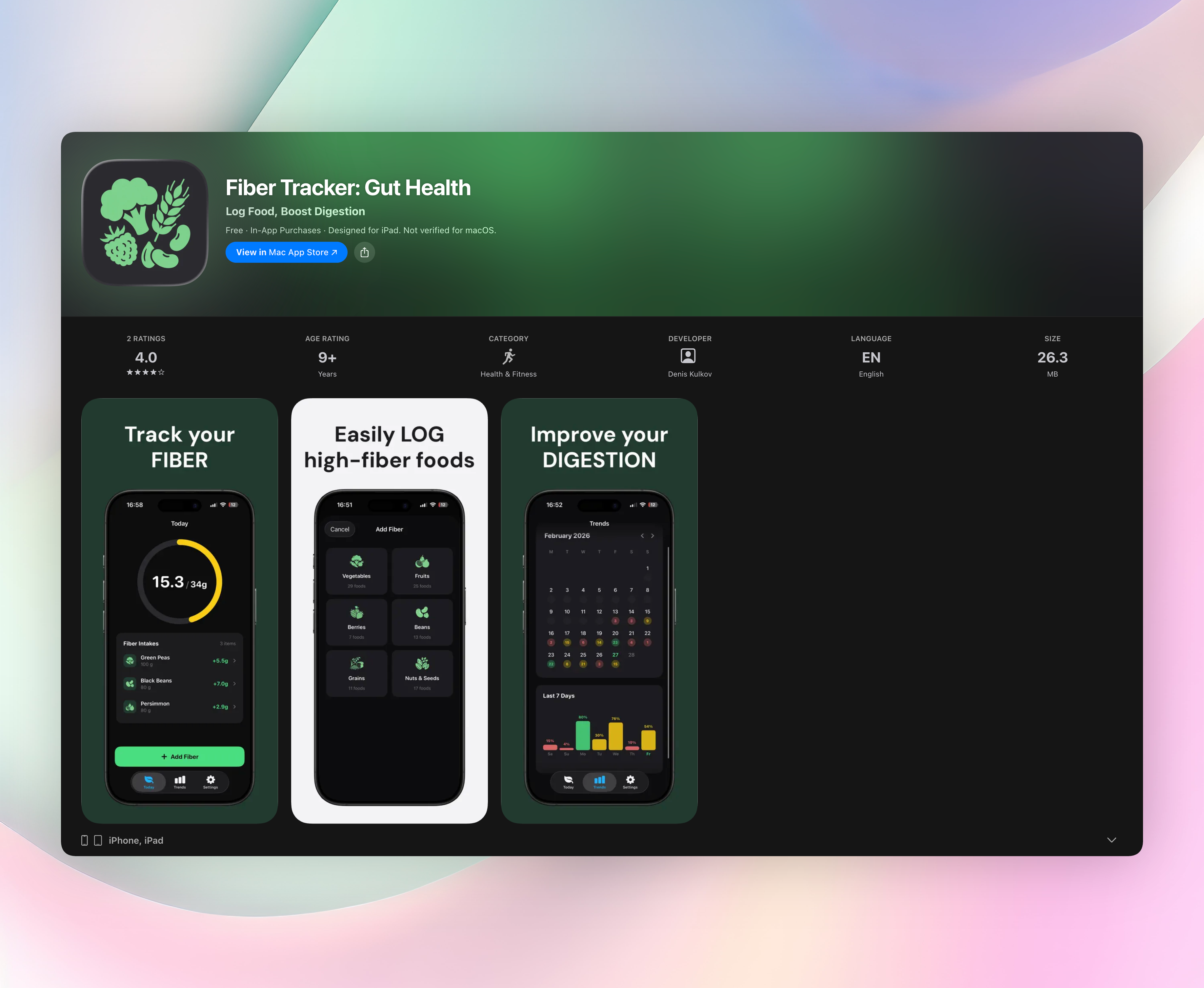
Most thrive35 alternatives still track symptoms, macros, water, and mood. Fiber Tracker does one thing and does it immediately: it translates broad advice into a concrete number of grams of fiber consumed versus your goal. The clean interface and one-tap logging make tracking stick, because there’s nothing to overthink.
Standout features:
- Set a daily fiber target based on your gender and age.
- Search a straightforward food database to log what you ate.
- See your intake at a glance with a clean progress ring and weekly streak calendar.
- Everything runs on your device: no account, no data collection, no ads.
The app estimates fiber content of mixed meals from simple ingredient picks, so you never need barcodes or perfect recall. It’s the only app in this article with a direct download link, and it’s worth installing first if you want to actually know where your fiber stands every day.
Get Fiber Tracker · Fiber Tracker on the App Store
2. myIBS
Best for: those with a formal IBS diagnosis who need to present symptom journals to a clinician.
This Android-only tracker uses four pillars: symptoms, food, sleep, and stress, so you can map digestive patterns to multiple triggers. Built-in reminders keep logging consistent, and the summary charts turn weeks of data into quick talking points for your next appointment. If you’re on iOS, jump to option #3 or #1.
3. Bowelle
Best for: iOS users who want a fast, visual food-and-symptom diary with zero clutter.
The minimalist logging flow gets you in and out in seconds, and the timeline view surfaces patterns without manual analysis. Color-coded symptom intensity charts make correlations jump out at a glance. Although it isn’t frequently updated anymore, it still works well for basic trigger spotting.
4. mySymptoms Food Diary
Best for: Android owners who want correlation analysis without a subscription.
You log meals, symptoms, and wellness metrics like sleep, stress, and bowel movements. The app then runs automatic “likely trigger” analysis on your own data, giving you a statistical heads-up about problem foods. Printable reports and direct export let you hand the raw data straight to a dietitian.
5. Gut Health Tracker: SuperBiome
Best for: turning gut health into a game and seeing diet changes reflected in a daily score.
Instead of a sterile logbook, you get a “Gut Health Score” that estimates microbiome impact based on food diversity and fiber intake. Friendly nudges and challenges keep motivation up, and the trend line shows progress at a glance. It’s a playful way to make daily tracking feel less clinical.
6. Elsavie
Best for: data-driven users who want microbiome insights grounded in published research.
This Android-only tracker covers digestion, stool type, and lifestyle factors, then gives you feedback loops backed by scientific studies. The privacy standards are high (Nordic health-tech background), and the tips come from peer-reviewed gut health literature, not generic pop-health advice.
7. Plop
Best for: anyone who wants the most direct Bristol Stool Scale logger plus doctor-ready reports.
Plop makes logging bowel movements fast and private, then overlays food and symptom data to detect patterns. One tap generates a PDF timeline you can hand to a gastroenterologist. The machine-learning-driven pattern detection calls out potential trigger foods without you doing any math.
8. Biome: Gut Health Improvement
Best for: habit-builders who want a structured plan to improve digestion naturally.
Biome acts more like a coach than a blank diary. Daily check-ins, diet tracking, and gentle suggestions nudge you toward gut-friendly choices. Habit streaks and reminders focus on consistency rather than perfection, making it a good fit if you respond better to guidance than to self-directed logging.
9. Ate Food Diary
Best for: people who want to break from calorie counting and adopt a mindful eating practice.
The photo-first logging keeps things simple: snap a meal, answer “on track” or “off track,” and move on. It also tracks water, exercise, and mood for a holistic view without nutrition minutiae. The timeline of meal photos helps you visually audit your eating rhythm and portions.
How we picked these apps
We started from the problems Thrive35 users commonly run into: bloated interfaces, missing fiber focus, and platform limits, and looked for apps that solve them cleanly. Every pick had to offer a clear digestive-health angle, fast logging, and a privacy stance we’d be comfortable using ourselves. We tested each app on real meals and symptoms over several days, rejecting any that hid basic features behind steep paywalls or hadn’t been updated in years.
Frequently asked questions
What is Thrive35, and why look for alternatives?
Thrive35 is a gut-health tracker, but users often flag an outdated interface, no dedicated fiber emphasis, and limited platform support. That pushes people to hunt for thrive35 alternatives that feel lighter, more modern, or more focused on specific digestive goals.
Are these apps free?
Most offer a freemium model or free trial. Fiber Tracker has a generous free tier with no account required, and none of the listed apps force a subscription just to test core logging.
Can I share data with my doctor?
Yes. Plop and mySymptoms generate PDF reports tailored for clinician visits. Even simpler trackers let you screenshot summaries, which often works well enough for a quick check-in.
The verdict
Fiber Tracker: Gut Health is the pragmatic thrive35 alternative because it cuts through the noise and delivers immediate, actionable fiber tracking. No account required, nothing to overthink. Just a clear number that tells you if you’re closing the fiber gap today. If you want symptom correlations or microbiome scores, the other eight apps fill those niches well. But if you just need to know where your fiber stands without distraction, start here.
Get Fiber Tracker and start closing your fiber gap today.
Free Fiber tools
- Bristol Stool ChartCompare your stool with the seven-point Bristol bowel movement chart to see what the form indicates about gut transit time and general dietary levers.
- Carrot Fiber CalculatorEstimate the fiber in carrots by entering an amount, carrot size or weight, and whether they are raw or cooked.
- Daily Fiber CalculatorEstimate how much fiber each day fits your age, sex and life stage. See the personal target beside the FDA Daily Value used on nutrition labels.
- Fiber for Weight Loss CalculatorUse your calorie target or estimate one from your body measurements and activity. Get a daily fiber target and a gradual ramp-up schedule.
- Fruit Fiber ChartChoose a fruit, enter its serving size and compare fiber grams with other fruits from the same list.
- Fiber Ramp-Up PlannerWondering how much is too much fiber? Enter your current and target intake to get a week-by-week ramp-up schedule with matching fluid context.
- High Fiber Foods ChartUse this high-fiber foods chart for constipation to compare plant foods by category and sort them by fiber per 100 g or typical serving.
- High-Fiber Meal Plan BuilderChoose a daily fiber target, number of meals and food preference to create a one-day combination with fiber per meal and progress toward your target.
- Prune and Prune Juice Fiber CalculatorEstimate how much fiber and approximate sorbitol you get from prunes or prune juice, including how much prune juice for constipation questions may miss: juice has much less fiber than whole prunes.
- Soluble vs Insoluble Fiber ChartCompare soluble and insoluble fiber values by food and serving size for Fiber Tracker logging.
- Sweet Potato Fiber CalculatorEstimate how much fiber in a sweet potato based on its weight, cooking method and whether you eat the skin. See fibre, calories, carbs and daily target share.