
Best 8 MySymptoms Alternatives in 2026: Find Your Perfect Health Tracker
Introduction
If you’re looking for mysymptoms alternatives that actually help, Fiber Tracker: Gut Health is our top pick. It takes the vague “eat more fiber” advice and turns it into a simple, private daily habit. Below we cover seven other solid trackers for food, symptoms, and gut patterns. No fluff, just tested picks that we’d use ourselves.
Quick comparison table
| App | Best for | Platform | Price |
|---|---|---|---|
| Fiber Tracker | Closing the fiber gap quickly | iOS | Free |
| Triggerbites | AI ingredient extraction from logs | iOS | Freemium |
| Bowelle | IBS tracking on one screen | iOS | Free |
| Cara Care | Physician‑designed digestive tracking | iOS, Android | Freemium |
| Bearable | Spotting symptom-mood-activity links | iOS, Android | Freemium |
| Cronometer | Granular micronutrient breakdowns | iOS, Android | Freemium |
| Fig | Grocery scanning with dietary filters | iOS, Android | Free |
| Flaredown | Chronic condition and flare‑up history | iOS, Android | Free |
The best MySymptoms alternatives
These are the apps we’d actually recommend after hands‑on testing, ranked by how well they handle daily food‑symptom tracking.
1. Fiber Tracker: Gut Health
Best for: closing the fiber gap without diet‑journal burnout.
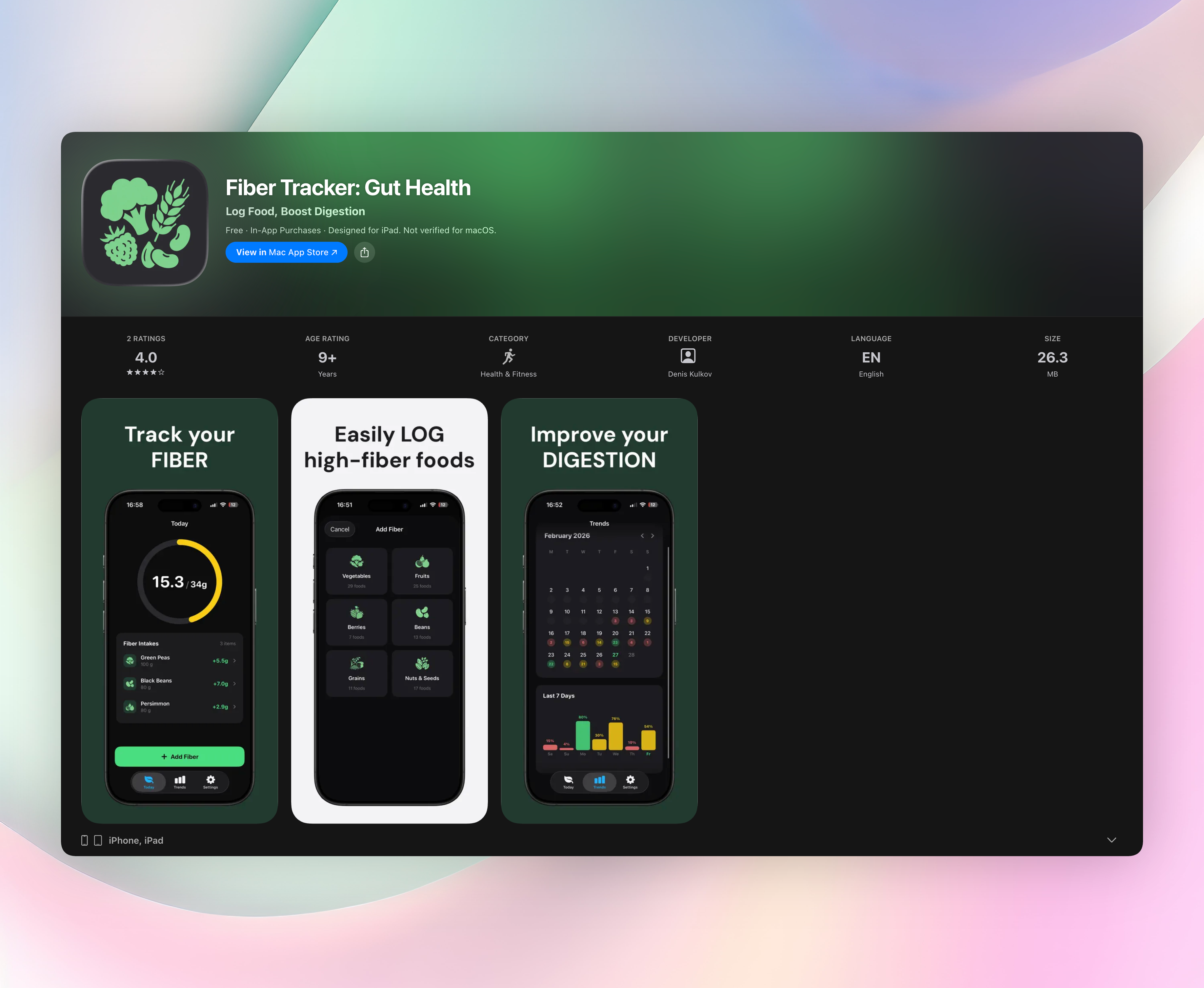
Most symptom journals ask for a dozen data points before breakfast. Fiber Tracker flips that. It focuses on one high‑impact metric most people miss. You set a daily fiber target, search for what you ate, and watch a clean progress ring fill up. No accounts, no social feeds, no data leaving your phone. It’s a gut‑health scorekeeper that simply shows whether you’re getting enough fiber.
- Private by design. No sign‑up, no cloud sync, everything stays on your device
- Intelligent food database gets you in and out of a log in seconds
- Weekly streak calendar makes consistency visible without judgment
- Zero clutter: only fiber and gut health, not a general life tracker
Get Fiber Tracker · Fiber Tracker on the App Store
2. Triggerbites
Best for: automatically pulling ingredients from messy free‑text, voice, or photo logs.
Instead of manually tagging every ingredient, you toss in notes however you like. The AI breaks down what you ate and flags possible delayed triggers over time. It’s set and forget pattern detection, ideal if strict journaling feels like a chore. iOS only.
3. Bowelle
Best for: IBS tracking on one screen.
Bowelle puts food, stress, and bowel movements on a single daily diary. No jumping between tabs. You log everything in one view and get straightforward charts that connect flare‑ups to your routine. No account required, and it’s refreshingly simple to start. iOS only.
4. Cara Care
Best for: physician‑designed digestive tracking across nutrition, stress, and meds.
Built with input from doctors, Cara Care logs meals, moods, stool consistency, and medications, then connects the dots. It gives practical advice based on your patterns, not generic tips. Available on iOS and Android with a capable free tier.
5. Bearable
Best for: spotting correlations between symptoms, mood, and daily activities.
Bearable uses a quick tap to rate system for dozens of health factors. The correlation tool turns those few seconds of daily input into clear insights, like what’s actually making your afternoon slump worse. Works on iOS and Android.
6. Cronometer
Best for: tracking micronutrients and vitamin intake with granular precision.
If you want to see exactly how much magnesium or B12 you’re getting, Cronometer delivers. It’s less symptom focused and more of a nutrient dense ledger, syncing with biometrics for a full picture. iOS and Android.
7. Fig
Best for: navigating grocery stores with dietary restrictions and intolerances.
Scan a barcode and Fig immediately flags allergens, FODMAPs, gluten, or any of 100+ diet profiles you’ve set. It’s a grocery aisle translator that makes label reading instant. iOS and Android, free to use.
8. Flaredown
Best for: tracking chronic conditions and medication effects over time.
Flaredown logs flare‑ups, treatments, and daily choices to build a personal health timeline. The history views are clear enough to hand to a doctor and say, “This is what triggered my worst days.” iOS and Android.
How we picked these apps
We installed every app and ran real‑world logs for a solid week, focusing on one thing: would we still use it next Monday? Logging speed mattered most. If a five‑bite snack took two minutes to record, it was out. We also prioritized privacy models that don’t demand an account for basic features, and data visualizations that actually reveal links between food and symptoms. Anything that buried useful data under social feeds or paywalled core tracking was dropped.
Fiber Tracker earned the top spot because it solved a specific, often‑ignored problem, practical fiber tracking, without feature bloat. The other picks are here because they nail a particular angle, from AI ingredient extraction to grocery scanning, and stood up to daily use.
Frequently asked questions
Can Fiber Tracker fully replace MySymptoms?
It depends on what you tracked. Fiber Tracker focuses tightly on fiber intake and gut health, so it won’t log joint pain or skin issues. If you need broad symptom logging, pairing it with a more general tracker works, but for daily gut health it stands perfectly alone.
Are these apps safe for my health data?
Most keep data on‑device by default. Fiber Tracker doesn’t require an account at all, and apps like Bowelle and Flaredown store logs locally. For the others that sync, standard encryption is used, but check the App Store privacy card if you’re cautious.
Do I need a subscription to get value?
No, the core tracker in Fiber Tracker is completely free. Cara Care, Cronometer, and Bearable all have useful free tiers, with premium unlocking deeper analysis or extra logging styles. Every pick here is functional without paying, and we’ve noted where premium adds niche extras.
The verdict
If you’re tired of symptom journals that demand a medical degree to fill out, Fiber Tracker: Gut Health is the best mysymptoms alternative we’ve tested. It respects your time, keeps your data off the cloud, and turns a few seconds of daily logging into an immediate read on your fiber gap. The other seven picks cover specific needs: AI powered ingredient extraction, IBS diaries, grocery scanning, micronutrient deep dives, and chronic illness timelines, so you can mix and match as your health tracking evolves.
Free Fiber tools
- Bristol Stool ChartCompare your stool with the seven-point Bristol bowel movement chart to see what the form indicates about gut transit time and general dietary levers.
- Carrot Fiber CalculatorEstimate the fiber in carrots by entering an amount, carrot size or weight, and whether they are raw or cooked.
- Daily Fiber CalculatorEstimate how much fiber each day fits your age, sex and life stage. See the personal target beside the FDA Daily Value used on nutrition labels.
- Fiber for Weight Loss CalculatorUse your calorie target or estimate one from your body measurements and activity. Get a daily fiber target and a gradual ramp-up schedule.
- Fruit Fiber ChartChoose a fruit, enter its serving size and compare fiber grams with other fruits from the same list.
- Fiber Ramp-Up PlannerWondering how much is too much fiber? Enter your current and target intake to get a week-by-week ramp-up schedule with matching fluid context.
- High Fiber Foods ChartUse this high-fiber foods chart for constipation to compare plant foods by category and sort them by fiber per 100 g or typical serving.
- High-Fiber Meal Plan BuilderChoose a daily fiber target, number of meals and food preference to create a one-day combination with fiber per meal and progress toward your target.
- Prune and Prune Juice Fiber CalculatorEstimate how much fiber and approximate sorbitol you get from prunes or prune juice, including how much prune juice for constipation questions may miss: juice has much less fiber than whole prunes.
- Soluble vs Insoluble Fiber ChartCompare soluble and insoluble fiber values by food and serving size for Fiber Tracker logging.
- Sweet Potato Fiber CalculatorEstimate how much fiber in a sweet potato based on its weight, cooking method and whether you eat the skin. See fibre, calories, carbs and daily target share.